501(c) 3
Tax Exempt Public Charity


Forensic Evaluators501(c) 3 · Tax Exempt Public Charity
MISSION & HISTORY
About NBFE
Our mission, history, founder, and the people who helped shape NBFE.
 NBFE Headquarters, Ormond Beach, Florida
Our Mission Statement
The mission of NBFE is to elevate the practice of forensic mental health evaluations. NBFE strives to ensure that highest level of standards are developed, maintained, and practiced by our members. We believe that such standards better inform the court system, promoting the welfare and protection of the American public.
NBFE accomplishes this mission through two goals:
- To provide quality training, education, and consultation for mental health professionals practicing forensic mental health evaluation. This is accomplished through:
- a rigorous certification program inclusive of the vetting of applicants and the administration of written and oral examination,
- a continuing education program consisting of live events, homestudies, and “on-demand” webinars, and
- publications developed and disseminated by a highly specialized team of trained forensic mental health professionals.
- To expand community access to forensic evaluation by advocating for fair and equal access to psychological testing and evaluation for all licensed mental health professions (i.e., counselors, marriage and family therapists, psychologists, psychiatrists, social workers, and psychiatric nurse practitioners). This accomplished by:
- developing partnerships with professional associations,
- providing forensic mental health-related technical consultation to professional associations,
- educating legislators on issues related to forensic mental health; and
- publishing and updating analysis papers on testing qualifications.
Our History
NBFE was initially established in 2003 to enhance skills of licensed mental health professionals and forensic counselors, otherwise not effectively trained, or recognized by the public or private sector, as well as by the legal or mental health field. Eligible candidates will be professionally recognized and nationally credentialed with NBFE certification. In 2009 NBFE became a not-for-profit charitable corporation.
NBFE was established to promote and serve the continuing education needs of licensed mental health professionals and forensic counselors nationally. Additionally, NBFE serves families of difficult children by providing specialized treatment plans. This is accomplished through a professional team approach used to assess and diagnose attention deficit hyperactivity disorders, autism, disruptive behaviors, oppositional defiant disorders, and various other problematic child behavioral issues.
Forensic mental health evaluations have historically been under the dominion of psychiatrists and psychologists. The American Board of Forensic Psychology, first chartered in 1976, restricts its membership candidates to doctoral degrees in psychology accredited by APA, CPA, or doctoral programs meeting designated criteria specific to psychologists.
Similarly, in order to become a forensic psychiatrist, one must first be a board certified psychiatrist, successfully graduate from medical school, perform an internship of one-year, and meet other closely related regulations that are designated criteria specific to psychiatry.
Dr. Norman Hoffman, NBFE's Founder, quickly learned that, although he possessed years of experience and highly credible training in the court arena, he had to deal with the historic truth; the court placed little weight on those outside of being a psychologist or psychiatrist. Historically, only two mental health professions, psychiatry and psychology, were considered by the legal and mental health field, qualified to perform forensic mental health evaluations.
After years of facing the scrutiny of voir dire*, Dr. Hoffman took on his greatest challenge creating a credible-evidentiary based process, training and certifying eligible licensed professional counselors to testify in court as experts.
There are over two-hundred thousand, licensed, (non-psychiatrists --psychologists) mental health professionals in the United States. Many of whom are looking towards obtaining specialized certification training and stature in providing forensic mental health evaluations, and expert court testimony. Therefore, it became necessary to develop a credible and professionally recognized training/certification process for licensed mental health professionals. Thus, NBFE was created.
*Voire Dire [vwär ˈdir] is a hearing to determine the admissibility of evidence, or the competency of a witness.
A Letter from Dr. Norman Hoffman, the Founder of NBFE, on NBFE's Roots
Upon reflecting on how the National Board of Forensic Evaluators was formed, I go back to my experience when I was asked to go to court on behalf of my patients as well as an expert. It was during the late 70s while practicing in Pennsylvania, I had my first experience testifying as a Fact witness. I thought I did fairly well providing the court details of my patient. However, it was when I was asked, by an attorney, to provide expert testimony, the pile-up occurred. The direct examination went well. During the cross-examination, I went into a psychodynamic dissertation that I thought went extremely well until I was asked, “Where is the cathexis located?” I replied, “What?” It was not until the attorney took me down a very deep rabbit hole that I began to recognize that I had little or no knowledge of what an expert was expected to know when presenting testimony. I was also aware that most licensed mental health professionals, including psychologists and psychiatrists, had little training and sound experience in the forensic mental health arena.
I continued to supervise and write mental health evaluations in my role as Outpatient Service Director at the Hazelton-Nanticoke MH/MR Center in Nanticoke, Pennsylvania. At the same time, I became deeply engrossed in developing familiarity and expertise in a venue in which I had little experience. I read and went to workshops. Having the good fortune of being acquainted with several family law and criminal attorneys, I soaked in everything they had to teach and mentor. Slowly, I began to obtain my court experience while utilizing the mentoring of sage advice.
It was not until 2003 that, sleepless and obsessed with the notion of committing my experience to pen, I hurriedly ran to my computer and began to write. However, while involved in promulgating my experience, I considered the possibility of developing a training and certification process for master’s degree licensees. It was obvious that only psychologists and psychiatrists had the recognition to conduct forensic evaluations. The roots of NBFE were born.
After many drafts, I was faced with the “how-to” get NBFE known to master’s degree licensees. I first contacted as many highly recognized professionals in the counseling field as well as attorneys, physicians, and other allied professionals. After acquiring over a dozen esteemed professionals as NBFE’s advisory board, I contacted Dr. Richard Stride to request his commitment as one of our board members. He graciously agreed. Dr. Valerie G Hoffman agreed as well, and she is currently our Oral Examination Committee Chair.
It became clear that there were only two nationally known and recognized organizations in the counseling profession. I contacted the American Counseling Association (ACA) and was directed to Dr. David Kaplan. After many discussions and communications, I was invited to the ACA board meeting to address their full board. After meticulous vetting, NBFE and ACA joined as our first professional partner. This joyous event took place in 2004. Gilbert Robbins, III was NBFEs’ first certificated member in December 2004. NBFE and ACA had our first conjoined certification training in 2005 at the Omni Center in Georgia. We had 47 participants. In September, that same year, the American Mental Health Counselors Association (AMHCA) and NBFE developed an agreement as professional partners.
From 2008 until 2012, I pursued a professional partnership with the Florida Mental Health Counselors Association (FMHCA). In 2009, NBFE became a nonprofit public charity. Because of FMHCA’s internal turmoil and organizational issues, it was not until 2012 that an agreement was signed.
From NBFE’s inception in 2003, and until 2016, our operating expenses were drained from my personal account. In 2016, we had an operating budget of around $6,000.00. NBFE was finally in the black. However, we were a “One-Man-Band.” I was dreadfully concerned about what would happen if I was “hit by a bus.” NBFE would terminate. While being treasurer of FMHCA from 2012, I became aware of Aaron Norton, a key member of the FMHCA board. He was a brilliant, dedicated member of the board, and a man of creative and encyclopedic ideas. In 2015, I asked Aaron if he would consider being NBFE’s executive director. He said that he was too busy with his doctorate program, board activities, private practice, and a plethora of professional activities related to his professional commitments. I was committed to getting him aboard. Unrelenting, I continued to pursue Aaron in the hope he would take the helm and continue NBFE’s mission to ensure its continued existence and development. After relentless pursuit, in August 2016 Aaron finally agreed to be NBFE’s Executive Director. NBFE had a diminishing budget, and we could not offer him a salary commensurate with our expectations. In spite of offering him small compensation, he agreed.
Since August 2016, NBFE’s productivity exponentially grew such that we could finally realize financial growth. NBFE was now able to expand our homestudies, “on demand” training programs, and many other certification training programs. I no longer had to reach into my pockets to salvage and rescue the existence of NBFE.
As NBFE realized professional growth and recognition, as well as financial growth, we began to require hours of work beyond the capacity of Aaron and our board. Valentino Travieso was acting as a volunteer for NBFE. With his work ethic and knowledge of our interworking, he agreed to become our Assistant Administrator. Now, with a highly efficient and dedicated work force, NBFE was on its way to become “the Gold Standard” in the Forensic Mental Health training and certification arena.
Today, NBFE is proudly partnered with over 15 reputable national, state, and local mental health organizations in the United States. We have made ourselves the home for mental health professionals who wish to expand their knowledge and expertise in the forensic mental health arena. We have earned our reputation through quality training, professional advocacy, and or commitment to certifying not only psychologists and psychiatrists, but all licensed mental health professionals (e.g., clinical mental health counselors, clinical social workers, marriage and family therapists, psychiatric nurse practitioners) who have appropriate training and expertise.
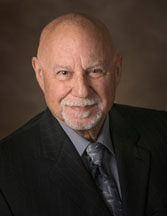
Norman Hoffman, Ph.D., Ed.D., LMHC, LMFT, NCC, CFMHE, CCCE, CFBA
President and Founder of NBFE
NBFE Recognizes Dr. Richard Stride

After Dr. Richard Stride was certified in December 2006, a few years after the inception of NBFE, he volunteered to be an NBFE “Train the Trainer.” This was a program implemented in 2008 to assist use in training candidates throughout regions of the United States. He was instrumental in the development of how the oral process should be conducted. In 2008, Dr. Stride joined Dr. Val and me in a two-day certification training in Hawaii.
When NBFE became a nonprofit public charity in 2009, Dr. Stride agreed to be one of our highly esteemed board members. Additionally, he was our very first Chair in NBFEs Oral committee to examine our candidates after submitting their sample reports. He was a valuable part of assisting in developing the policy and procedures for our oral review, and to strengthen the process for our candidates in submitting their reports.
NBFE recognizes Dr. Richard Stride for his unrequited loyalty and contributions to NBFE when NBFE was in its infancy stages. His vision, contribution, and devotion to our mission, has helped NBFE today, create the genesis for our continued growth and national recognition.
How NBFE developed its evaluation standards
Development of NBFE’s Sample Report
NBFE LEADERSHIP
About Our Founder
Dr. Norman Hoffman
Dr. Hoffman: A Visionary in Forensic Mental Health
Some see obstacles—Dr. Hoffman saw opportunity. As an innovator and trailblazer, he redefined the role of licensed professional counselors in forensic mental health, paving a path that was once inaccessible. With a relentless drive for progress, he challenged the status quo, breaking barriers that had long favored psychiatrists and psychologists.
Determined to elevate professional recognition, Dr. Hoffman boldly developed a groundbreaking training and certification process, ensuring licensed professional counselors could achieve equal—if not greater—status in forensic mental health. His unwavering dedication in the face of systematic challenges has reshaped the industry, giving counselors the credibility and influence they deserve.
A true pioneer, Dr. Hoffman’s passion and ingenuity have set the standard for forensic mental health expert witnesses. His work continues to empower professionals to step confidently into the field, armed with the skills and recognition they need to succeed.
Today, as Clinical Director of the Counseling and Psychotherapy Center in Ormond Beach, Florida, Dr. Hoffman remains at the forefront of change, guiding families with the same passion and dedication that have defined his career. Yet, his journey is more than just professional—it’s also deeply personal. Music, his first love, continues to inspire his collaborative approach, bringing harmony to his work with parents, professionals, and the community. Whether in the clinic or composing jazz, Dr. Hoffman remains committed to breaking boundaries and transforming lives.
Innovation. Dedication. Leadership.
Dr. Hoffman isn’t just shaping the future of forensic mental health—he’s creating a legacy.
About NBFE's Founder

Dr. Norman Hoffman stands at the intersection of three seemingly disparate worlds: the clinic, the courtroom, and the nightclub. A licensed clinical marriage and family therapist, a certified forensic mental health evaluator, and an accomplished jazz musician, Dr. Hoffman has successfully integrated these fields to become a pioneering force in child development, music therapy, and forensic evaluation.
Though his career has taken many twists and turns, Dr. Hoffman’s journey began with a dream as a child growing up in Northeast Philadelphia. Inspired by his father, a police officer and a musician, he aspired to become a professional jazz pianist. He earned a Bachelor of Music degree from Philadelphia's University of the Arts, but it was his work with mentally challenged children and adolescents at the Devereux Foundation that redirected his path. Observing music’s transformative power on an autistic child sparked his interest in psychology and led him to pursue advanced studies at Villanova University and Combs College of Music.
Dr. Hoffman’s academic journey culminated in a Doctor of Music Therapy and a Ph.D. in Psychotherapy, blending his passion for music with a deep understanding of mental health. His first book, Hear the Music! A New Approach to Mental Health (1974), introduced a revolutionary approach to therapy using music, solidifying his status as a trailblazer.
As he expanded his career, Dr. Hoffman’s clinical experience grew alongside his expertise. He coordinated programs at the Community Mental Health Center of Palm Beach County and served in various leadership roles at the Hazleton/Nanticoke Mental Health Center. There, he became one of the first to introduce forensic evaluations for child custody cases. His work in this field deepened when he became Executive Director of Pompano Beach Counseling Services, where he specialized in a wide range of behavioral and mental health services, including child and family therapy, substance abuse treatment, and forensic evaluations.
In 1994, Dr. Hoffman pursued further academic studies, earning a Doctoral degree in Human Services Counseling and a Doctor of Pastoral Psychology. It was his frustration with the limitations of traditional therapy that led to his groundbreaking work in treating children and families. His book, Bad Children Can Happen to Good Parents (1998), revolutionized the way mental health professionals view children with behavioral challenges, focusing on the genetic causes of behavioral problems and offering a new treatment paradigm: helping parents "rewire" their children rather than "fixing" them.
Dr. Hoffman’s expertise is not just theoretical. His years of hands-on experience, both as a clinician and as an expert witness in family and criminal courts, led him to establish the National Board of Forensic Evaluators (NBFE) in 2003. The NBFE is the only forensic mental health counselor credentialing organization endorsed by the American Mental Health Counselors Association. Through NBFE, Dr. Hoffman has trained and certified counselors nationwide, offering specialized assessments and treatment plans for at-risk families and challenging children.
Dr. Hoffman’s work has shaped the way professionals and families understand mental health. His groundbreaking approach continues to empower parents, clinicians, and policymakers, emphasizing that parents are not to blame for their children’s struggles and that psychiatric medications are not always the best solution. He remains a leading voice in advocating for more comprehensive and compassionate methods of treatment.
With his unique blend of expertise in therapy, forensic evaluation, and music, Dr. Hoffman is committed to reshaping the future of mental health, one family at a time.
Read more about NBFE’s mission and history.

Let's stay connected
Valentino Norton
Questions about NBFE certification or training? Contact Valentino.